What is baseline health testing, and how is it different from your annual checkup?
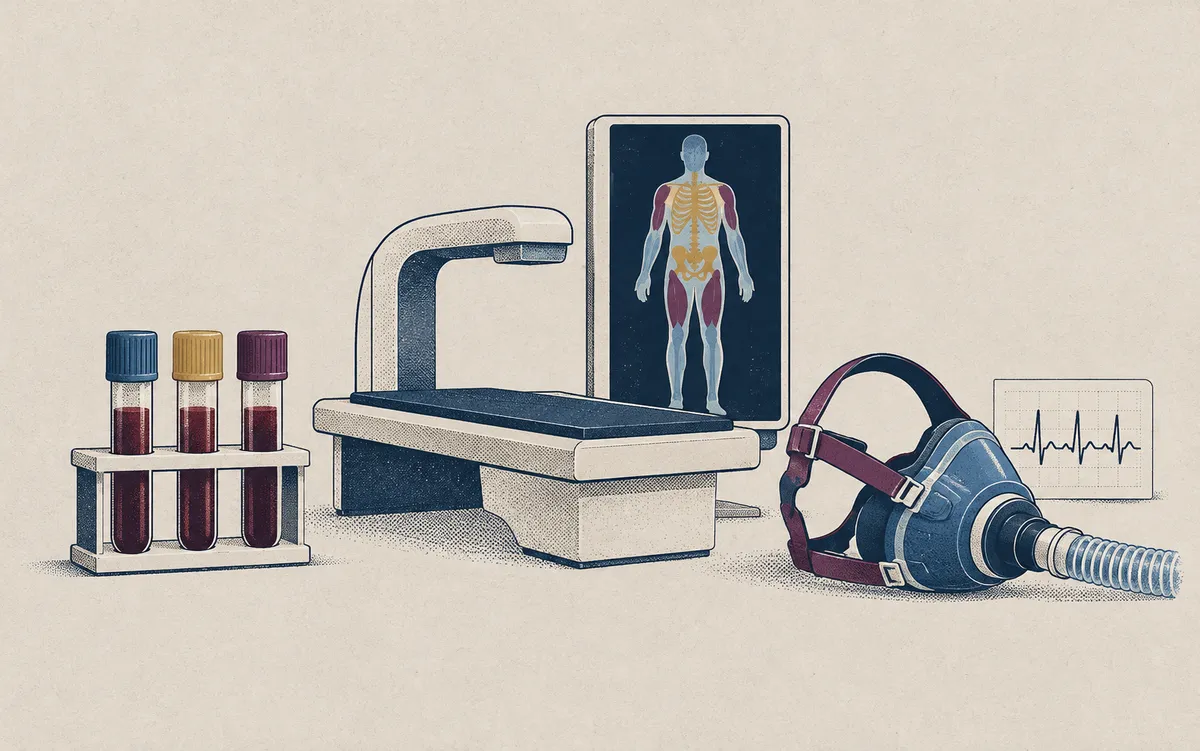
Quick answer: A baseline is your first full set of longevity tests: usually an advanced blood panel, a body composition scan and a fitness test, sometimes with genetics or imaging. It goes further than your yearly checkup and gives you a detailed starting point. The real value comes after: a clinic uses your results to build a plan with you, then retests the few numbers that matter to see if the plan is working.
Baseline testing vs your annual checkup
This is the first question most people have, and it’s a fair one. You already see your doctor once a year. What does a baseline add?
The short answer: they do different jobs, and they work best together.
| Compared | Your annual checkup | A longevity baseline |
|---|---|---|
| Main goal | Check how you’re doing, keep up with the screenings due for your age, and treat problems | Get a detailed starting point and track the things linked with aging well over time |
| Usually includes | Blood pressure, weight, a standard blood panel (cholesterol, blood sugar, basic kidney and liver markers) and age-based screenings | A wider blood panel, plus often a body composition scan, a fitness test, and sometimes genetics or imaging |
| Time with the doctor | Usually a short visit | Usually a longer results visit to go through everything with you |
| Cost | Usually covered by insurance as a preventive visit | Usually paid out of pocket |
| What happens next | Follow-up if something is out of range | A plan, then retests of the markers tied to that plan |
They also overlap. Both check your cholesterol and blood sugar, and both give you a starting point to compare against next time. The difference is mostly depth and follow-through. A baseline is a bigger first look, followed by a plan you track over time, alongside your regular doctor, not instead of them. Bring your baseline results to your next checkup so everyone looking after you sees the same picture.
Our guide to biomarker testing vs your annual physical goes deeper on what each blood panel covers.
What’s in a baseline, and why each part helps
Every clinic builds its baseline a little differently, but most draw from the same handful of tests. Here’s what each one looks at, why it’s worth having, and what clinics that publish a price charge for it.
| Test | What it looks at | Why it helps | Typical price |
|---|---|---|---|
| Advanced blood panel | Dozens of markers: ApoB and Lp(a) for heart risk, blood sugar and insulin, inflammation, hormones, vitamins, kidney and liver | A wider look than a standard panel, so you see where you stand on more of the things that change with age | $50 to $1,000 |
| Body composition scan (DEXA) | How much fat, muscle and bone you have, and where it sits, including fat around your organs | Shows what a bathroom scale can’t, like whether you’re keeping muscle as you age | $65 to $249 |
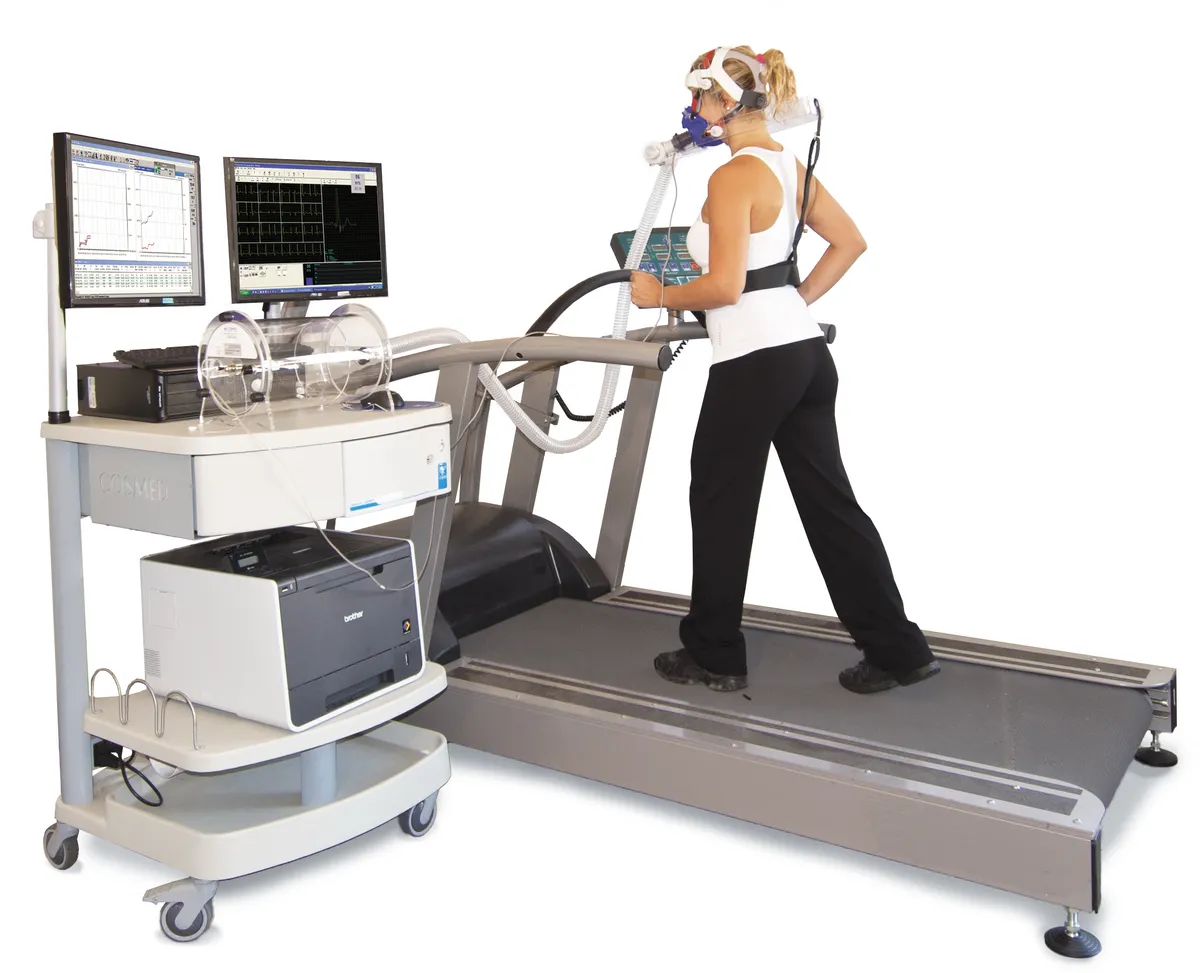
| Fitness test (VO2 max) | How much oxygen your body can use at full effort | Fitness is closely linked with living longer, and it’s something you can train and improve | $100 to $675 |
| Genetic test (sometimes) | Genes linked to inherited risk, for example for heart disease | Your genes don’t change, so it’s usually a one-time test that helps decide what to watch more closely | |
| Imaging (sometimes) | Pictures of the inside of your body, such as a heart calcium scan or a full-body MRI | Shows things a blood test can’t, like plaque in the heart’s arteries |
You don’t need every test on this list. A good clinic will help you choose based on your age, your family history and what you want to learn. For more on prices, see how much longevity clinics cost.
Compare what’s included and what it costs.
What’s in the blood panel
The blood panel is usually the biggest part of a baseline. Clinics advertise anything from 50 to over 100 markers, but most of them fall into a handful of groups. Here are 20 that show up on most longevity panels.
20 markers a longevity blood panel often includes
Tap any marker to see what it tells you.
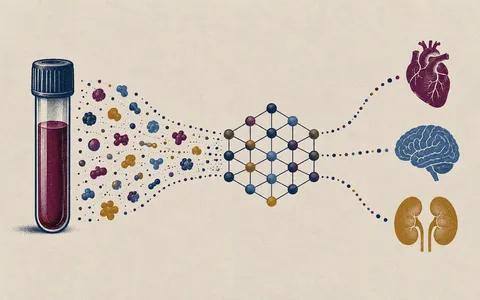
Some of these, like the lipid panel and fasting glucose, your regular doctor probably already checks. The ones a longevity panel tends to add are things like ApoB, Lp(a), fasting insulin and the omega-3 index. Our biomarker guide walks through every group, and our piece on measured vs derived biomarkers explains why some numbers on your report are calculated rather than measured.
Go deeper on each test

What your results can mean for you
Numbers on their own don’t mean much. What matters is what they lead to. Here are a few common examples of what a result might mean and what a clinic might suggest. These are illustrations, not advice; your own doctor will look at your full picture.
| If your baseline shows... | What it might mean | What a clinic might suggest |
|---|---|---|
| ApoB on the high side | More cholesterol-carrying particles in your blood, which is linked with heart risk over time | Changes to diet and exercise, a recheck in about 3 months, and a talk with your doctor about whether medication makes sense |
| A1C or fasting insulin creeping up | Your body may be working harder to keep blood sugar steady | More movement, especially after meals, food changes, maybe a few weeks with a glucose monitor, then a recheck in about 3 months |
| Less muscle than expected for your age (DEXA) | Muscle you’ll want to protect, since we naturally lose it with age | A strength training plan, a look at protein, and a repeat scan in about 6 months |
| More fat around your organs than expected (DEXA) | Visceral fat, the deep belly fat linked with heart and blood sugar problems | More movement, food changes, and a repeat scan on the same machine in about 6 to 12 months |
| VO2 max below the middle for your age | Room to improve your fitness, one of the strongest signs of a long life | A cardio plan, often easy steady sessions plus a few harder ones, and a retest in about 3 to 4 months |
| High Lp(a) | A mostly inherited heart risk factor that diet doesn’t change much | It’s usually checked once. It may make keeping your other heart markers in a healthy range a bigger priority, and your doctor may suggest a heart scan |
Notice the pattern. A good result tells you what to protect. A less good one tells you where to focus, and usually comes with a simple plan and a date to check again. If you want to see where your fitness number sits, our VO2 max chart by age shows the typical ranges, the DEXA guide explains what a body composition report shows, and our visceral fat guide explains why the fat around your organs matters. Some clinics also add a biological age test, which tries to sum up how fast your body is aging.
How a clinic turns your results into a plan
You shouldn’t have to make sense of a page of numbers on your own. Turning results into a plan is the clinic’s job, and it usually follows the same steps.
First comes a results visit. A doctor or care team goes through every result with you, explains what’s normal, what’s borderline and what needs attention, and answers your questions. Anything urgent gets flagged and sent to the right specialist or back to your regular doctor.
Next, you agree on a plan together. It usually focuses on two or three things, not twenty. That might be a training plan, changes to what you eat, better sleep, or a referral. Some clinics add coaching or check-ins between visits.
Then comes the retest. A few months later, the clinic repeats only the tests tied to your plan to see whether things are moving. If they are, you keep going. If not, the plan changes.
Think of it like a GPS. Your baseline is the “you are here” pin. The plan is the route. Retesting is the GPS recalculating: checking you’re still heading the right way and adjusting if you’re not.
We walk through that whole loop in what happens after longevity testing. And if you’re wondering whether any of this is worth it when you feel fine, see I feel healthy, so why test?
Why one result isn’t a trend
Test results move for everyday reasons: a bad night’s sleep, a hard workout the day before, a cold, the time of day, whether you’d eaten. That’s why doctors often repeat a surprising result before acting on it. For example, diagnosing diabetes usually takes a second test to confirm it.
Some tests bounce around much more than others. The chart below shows how much common blood tests typically vary from one test to the next in the same healthy person, even when nothing about their health has changed.
Source: Westgard biological variation database (within-person variation)
longevityclinicshub.comA1C barely moves, which is why it’s such a steady guide to blood sugar. CRP, a marker of inflammation, can swing by 40% or more after a cold or a hard workout. So one high CRP on its own tells you much less than one high A1C, and that’s exactly the kind of call your clinic helps you make.

How often common tests are repeated
Different tests change at different speeds, so there’s no single schedule. Your doctor will set the actual timing, but here’s roughly how it usually works.
| Test | How often it’s usually repeated |
|---|---|
| A1C | About every 3 months if you’re working on it, since it reflects your average blood sugar over about 3 months |
| Cholesterol and ApoB | A few months after a change in diet, exercise or medication |
| Vitamins and minerals | After a course of supplements, depending on what was low |
| Body composition (DEXA) | Every 6 to 12 months, since small short-term changes are mostly water |
| Fitness (VO2 max) | After a few months of steady training |
| Genetics and Lp(a) | Usually once, since they don’t change much |
| Imaging (MRI, CT) | Only when there’s a medical reason |
A full panel once a year can be a good check-in. In between, a shorter follow-up on the markers tied to your plan is usually enough.
One-time assessment or membership?
Clinics offer baselines in two main ways. A one-time assessment gives you the full set of tests and a results visit, and then the results are yours to take to your own doctor. A membership usually adds the plan, the check-ins and the retests over the year.
If you mainly want a clear picture of where you stand, a one-time assessment may be enough. If you’re making changes and want someone to track them with you, a membership can make more sense.
Enter your ZIP code to see clinics near you that offer a full baseline of tests.
Common questions
Is a baseline the same as an annual physical?
No. Your annual physical checks how you’re doing and keeps up with screenings, and it’s usually covered by insurance. A baseline goes wider and deeper, is usually self-pay, and is followed by a plan you track over time. They work best together.
Who explains my results?
The clinic’s doctor or care team, usually in a dedicated results visit. Ask before you book whether that visit is included and who leads it.
How often should I get my blood work retested?
It depends on the test and on your plan. Many people retest the markers they’re working on every few months and do a full panel once a year. Your doctor should explain the timing for each test they plan to repeat.
Do I need every test in a baseline?
No. A good clinic will help you pick the tests that fit your age, your family history and your goals.
Prepared by the LongevityClinicsHub editorial team. How we research and source these guides.
Sources
- MedlinePlus: How to understand your lab results
- NIDDK: The A1C test and diabetes
- NIDDK: Diabetes and prediabetes tests
- Westgard QC: Biological variation database (desirable specifications)
- CMS: Clinical Laboratory Improvement Amendments (CLIA)
- Prices: our math, from the published prices of the clinics we track
This guide is independent editorial content, written to orient, not to diagnose. It is not medical advice, and it is no substitute for a conversation with a licensed physician who knows your history. Where we describe what clinics claim, the claim belongs to the clinic.
Educational reading, not medical advice. Talk to a clinician about your own health.