Biological age tests: what they measure, and what an organ age score means
Quick answer: Your chronological age is how many birthdays you’ve had. A biological age test estimates how old your body seems, based on things like the chemical marks on your DNA, proteins in your blood, or your fitness. People use it to see how they’re aging and to check whether the changes they make are working. Since nobody can wait decades to see who lives to 100, biological age gives you a number you can track now.
Your age vs your biological age
Chronological age is the date on your birth certificate. But two people born the same year can be in very different shape. One runs marathons at 60, another struggles with stairs at 50.
Biological age puts a number on that difference. Researchers study large groups of people, learn which patterns show up in the body at each age, and compare your results to those patterns. If your body looks more like a typical 44-year-old’s than a 50-year-old’s, your biological age may come back as 44.
Illustration, not real people
longevityclinicshub.comThe same gap shows up between whole countries. A 2025 study used health data from around the world to estimate biological age country by country, based on how many age-related health problems people had. Among 65-year-old men, the average biological age ranged from 61 to 74 depending on where they lived. That’s a 13-year spread for people with the same birthday.
Source: Hansen CW and Strulik H, The Journal of the Economics of Ageing (2025)
longevityclinicshub.comAnd it can move. Between 1990 and 2019, 65-year-olds in most wealthy countries became biologically younger, by up to about two and a half years. Biological age isn’t fixed. Whole countries have shifted it, and so can one person.
Why biological age matters so much in longevity
That number turns out to be very useful, and here’s why. The real goal of longevity care is for people to live longer and stay healthy for more of those years. But if you wanted to know whether something actually helps people live to 90 or 100, you’d have to wait decades to find out.
That’s far too slow, both for research and for you as a person deciding what to do this year. So researchers look for measurements that change sooner and show how fast aging is happening. Biological age is one of the main ones.
Think of training for a marathon. You don’t wait until race day to find out whether your training is working. You check your pace on shorter runs along the way. Biological age tests are those shorter runs for aging.
Breaking aging into smaller pieces helps too. Instead of one number for the whole body, newer tests look organ by organ, because your heart, brain and kidneys don’t always age at the same speed. A large 2023 study in Nature used blood proteins from 5,676 people to estimate the age of 11 organs, and found that many people had one organ aging much faster than the rest.
About 1 in 5 people had at least one organ that looked much older than their age
1.7% had several organs aging fast
Source: Oh HSH et al., Nature (2023)
longevityclinicshub.comThose links come from large groups of people followed over time. A single test can’t predict what will happen to you, but they show why measuring aging organ by organ has caught on so quickly.

What makes a body, or an organ, age faster?
Biological age isn’t fixed by your birthday or your genes alone. Everyday habits show up in these tests too. Here are some of the clearest examples from research.
| Habit or factor | What studies have found | Organs it’s linked with |
|---|---|---|
| Carrying extra weight | In one study, the liver’s biological age rose by about 3.3 years for every 10 points of BMI. A 5′5″ woman weighing 200 pounds had a liver about 3 years “older” than one weighing 140 pounds | Liver, heart, blood vessels |
| Smoking | Smoking leaves lasting marks on your DNA. One of the most widely used biological age tests is partly built on those marks, and it’s one of the strongest at predicting how long people live | Lungs, heart, blood vessels, and nearly every other organ |
| Not moving much | In a large U.S. study of older adults, people who were physically active tested about 1.3 to 1.7 years younger on biological age tests than inactive people | Heart, muscles, brain |
| What you eat | People who ate more fish, poultry, fruit and vegetables tended to test younger in one large study | Whole body |
Sources: Horvath S et al., PNAS (2014); Health and Retirement Study (2025)
longevityclinicshub.comHealth problems also tend to snowball. Across many countries, the number of age-related health problems people have grows by about 3% a year, and each new problem makes the next one a little more likely. That’s why changes made earlier tend to pay off more.
These links come from studies of large groups, so they show patterns, not guarantees. But the encouraging part is that most of these are things you can change, which is exactly why people retest to see if their changes are working.
See who offers it, and what it costs.
How to get your biological age tested
There are two main ways, and both are simple.
| Question | At-home test kit | At a longevity clinic |
|---|---|---|
| How it works | You order a kit online, take a cheek swab, saliva or finger-prick blood sample at home, and mail it back | A nurse takes a blood sample, often as part of a wider set of tests |
| What it usually measures | Epigenetic age, from chemical marks on your DNA | Epigenetic age, an organ age panel, or a score built from your regular blood results |
| Results | Online report, usually in a few weeks | Reviewed with a doctor, alongside your other results |
| Best for | Curiosity, or a first look | Turning the number into a plan, and tracking it over time |
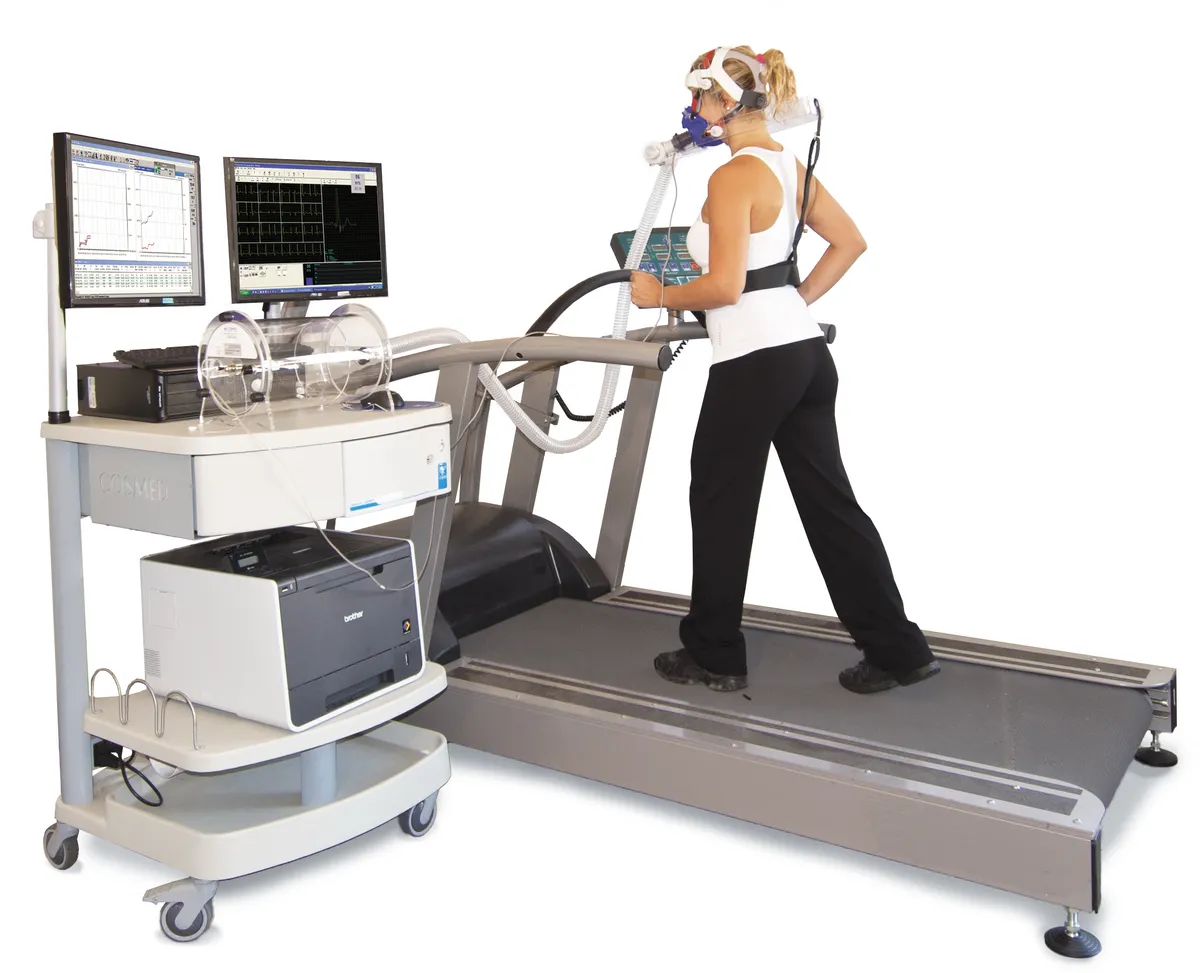
Most tests look at one of three things. Epigenetic tests read chemical marks on your DNA that change as you age. Organ age tests look at proteins in your blood. And some clinics combine ordinary lab results, like blood sugar, inflammation and kidney markers, into one age-like score. Your fitness, such as your VO2 max and grip strength, doesn’t come out as an “age,” but it tracks closely with how well people age, and many clinics measure it alongside.
Whichever route you choose, stick with the same test from the same company each time, so your next result can be compared fairly with your first.
How clinics and online memberships do it
Different places use different tests, so it helps to know what you’re actually getting. Here are a few real examples.
Online memberships. Function Health and Superpower are national memberships that run a large blood panel at a partner lab and show you a biological age alongside your results. Both calculate it from your regular blood markers, things like blood sugar, inflammation and kidney function, rather than from your DNA. Superpower says its number is a PhenoAge estimate, a well-known research formula built from routine blood tests. Function describes its score as different from DNA-based tests. The upside is that it comes with blood work you’re already getting. The trade-off is that it’s a different kind of number from an epigenetic test, so the two can’t be compared directly.
Clinics that use a DNA test. Many clinics we list send a blood sample for an epigenetic test, which reads the chemical marks on your DNA. Next Health includes a TruAge epigenetic test in its Executive Physical. Longevity Medical Clinic in Kirkland uses myDNAge, another DNA methylation test. Fountain Life in White Plains includes an epigenetic age reading in its assessment.
Clinics that use more than one measure. Some clinics combine several tests, because each one sees a different part of the picture. Cenegenics San Francisco lists two biological age measures, one of them PhenoAge. BluePath Longevity in Chicago runs an epigenetic aging test and a separate brain aging analysis, and the Northwestern Medicine Human Longevity Clinic uses several different measures of biological age.
Across the clinics we track, more than 30 publish a biological age test. When you compare them, ask which test they use, whether it’s from blood or saliva, and whether a doctor goes through the result with you.
Age vs pace of aging
Some tests tell you an age. Others tell you a pace. It’s worth knowing which one you’re getting.
Think of a car. The odometer shows how many miles it has done in total. The speedometer shows how fast it’s going right now. An age score is like the odometer: how much aging seems to have built up. A pace score is like the speedometer: how fast it seems to be happening at the moment. Both can be useful, but they answer different questions, so ask the clinic which one their test reports.
What is an organ age test?
Organ age tests are a newer idea. Instead of one number for your whole body, they try to estimate whether specific organs, like your heart, brain, kidneys or liver, look older or younger than expected.
They grew out of research like the 2023 Nature study above. Commercial organ age tests are inspired by that work, though each company uses its own set of proteins and its own model.
One thing to keep in mind: an organ age score comes from a blood test, not from looking at the organ itself. A “heart age” from blood proteins is more like a smoke alarm in one room than an inspection of the wiring. It might suggest a room worth checking. The actual check is a test that looks at that organ directly, such as a heart scan or an ultrasound, which your doctor can help you decide on.
How accurate are biological age tests?
This is the most common question, and it deserves a straight answer. Biological age tests are useful, but they’re less precise than the number on your report makes them look. Knowing why helps you use them well.
They aren’t standardized yet. No consumer biological age test is FDA-approved to diagnose anything. They’re sold as wellness tests, and most insurance doesn’t cover them. There’s also no shared reference standard, so each company uses its own lab methods and its own formula, and many don’t say which formula they use.
Every reading has a margin of error. Researchers estimate that many DNA-based tests are off by about three years either way. So a result that says you’re three years older than your age could, in reality, mean you’re right on track, or even a little younger. The first well-known DNA clocks were off by about 2.9 and 3.9 years on average, and some older versions gave readings up to nine years apart when the same blood sample was tested twice. Newer versions have cut that to under a year.
Different tests measure different things. A DNA test, a blood-marker score like PhenoAge, and an organ protein test are each looking at a different part of aging. So it’s normal for two of them to give you two different ages. The sample matters too: in one 2025 study, some DNA clocks read up to 30 years older from saliva or cheek swabs than from blood, because they were built on blood.
Sources: Apsley AT et al., Aging Cell (2025); Stanford Medicine (2026); Higgins-Chen AT et al., Nature Aging (2022)
longevityclinicshub.comThat might sound discouraging, but it shouldn’t put you off. Think of a bathroom scale that’s off by a couple of pounds. It’s not great for your exact weight, but if you use the same scale every week, it’s very good at showing whether you’re going up or down. Biological age tests work the same way: they’re most useful for following your own trend on the same test, not for a one-time verdict.
And the science behind them is real. In large studies, people whose blood-based biological age was higher had a higher risk of dying over the following years, about 9% higher for each extra year. That’s why researchers keep using these tests, and why a clinic will read your result next to your other numbers rather than on its own. Our guide to measured vs derived biomarkers explains why a number that comes out of a formula behaves differently from one a lab measures directly.
What your result can mean, and what a clinic does with it
You shouldn’t have to interpret a biological age score on your own. A good clinic reads it alongside your other results, explains what it means, and turns it into a plan. Here are a few common situations. They’re illustrations, not advice; your own doctor will look at your full picture.
| If your result shows... | What it might mean | What a clinic might suggest |
|---|---|---|
| A biological age older than your real age | Some signals in your body look like those of older people, though the test can’t say which ones on its own | Look at your other results (blood sugar, cholesterol, blood pressure, fitness, sleep) to find what’s driving it, agree on two or three changes, and retest with the same test in about 6 to 12 months |
| A biological age younger than your real age | Your signals look like those of younger people | Keep doing what’s working, and keep it as a starting point to compare against later |
| One organ looking older than the rest | That organ’s protein signals look older than expected | A test that looks at that organ directly, such as a heart scan or an ultrasound, and a talk with your doctor |
| Two tests giving different ages | They use different samples and models, so this is common | Pick one test and stick with it, rather than comparing across companies |
| A small change since your last test | It may be real, or it may be normal test-to-test variation | Look at whether your other numbers moved the same way before reading much into it |
A score on its own is a conversation starter. What you do about it comes from the numbers around it. If your biological age improves and your blood sugar, cholesterol and fitness improve too, that’s a picture you can trust much more. For how clinics build that plan and decide what to retest, see baseline testing vs retesting.
What a biological age test costs
Some clinics include one in a wider assessment or membership. These tests are almost always self-pay. For a wider look at prices, see how much longevity clinics cost.
Enter your ZIP code to see clinics near you that offer biological age tests.
Common questions
Are biological age tests accurate?
They measure real biology and are well studied in large groups of people. For one person, though, a result can be off by a few years, and different tests can disagree. They’re most useful for tracking your own trend on the same test, read alongside your regular health numbers.
Can you lower your biological age?
A score can move, and some small studies have reported changes after people changed their habits. But a lower score on its own doesn’t prove your body has gotten younger. It’s most convincing when your other health numbers improve too.
Is an organ age test the same as a scan of my organs?
No. It’s a blood test that estimates how old an organ seems from proteins in your blood. It doesn’t look at the organ itself. If a result worries you, a test that looks at that organ directly is the next step, and your doctor can help you choose it.
How do Function Health and Superpower measure biological age?
Both calculate it from the blood markers in their panel, not from your DNA. Superpower calls its number a PhenoAge estimate. Because it’s a different kind of test, it won’t match a DNA-based result.
Why did two tests give me different ages?
They probably used different samples, measurements and models. Neither is necessarily wrong. If you want to follow a trend, stick with one test from one lab.
Prepared by the LongevityClinicsHub editorial team. How we research and source these guides.
Keep reading
Sources
- Oh HSH et al., Organ aging signatures in the plasma proteome track health and disease. Nature (2023)
- PubMed: Limits of epigenetic clocks as personal biomarkers (2025)
- PMC: Epigenetic age prediction
- Horvath S et al., Obesity accelerates epigenetic aging of human liver. PNAS (2014)
- Lu AT et al., DNA methylation GrimAge strongly predicts lifespan and healthspan. Aging (2019)
- Physical activity is associated with decreased epigenetic aging: the Health and Retirement Study
- Quach A et al., Epigenetic clock analysis of diet, exercise, education, and lifestyle factors. Aging (2017)
- Hansen CW, Strulik H, Biological age across the globe: 1990 to 2019. The Journal of the Economics of Ageing (2025)
- Stanford Medicine: Biological vs chronological age (2026)
- Lohman T et al., Predictors of biological age: the implications for wellness and aging research. Gerontology and Geriatric Medicine (2021)
- Apsley AT et al., Cross-tissue comparison of epigenetic aging clocks in humans. Aging Cell (2025)
- The Scientist: Why biological age results differ across tests
- Superpower: Biological age
- Function Health: What we test
- Higgins-Chen AT et al., A computational solution for bolstering reliability of epigenetic clocks. Nature Aging (2022)
- PMC: Endpoints for geroscience clinical trials
- Nature Aging: Proteomic aging clocks in epidemiological studies
- Prices: our math, from the published prices of the clinics we track
This guide is independent editorial content, written to orient, not to diagnose. It is not medical advice, and it is no substitute for a conversation with a licensed physician who knows your history. Where we describe what clinics claim, the claim belongs to the clinic.
Educational reading, not medical advice. Talk to a clinician about your own health.